Calligraffiti - Beyond the Streets
Inside lilipad's Calligraffiti workshops in Berlin.
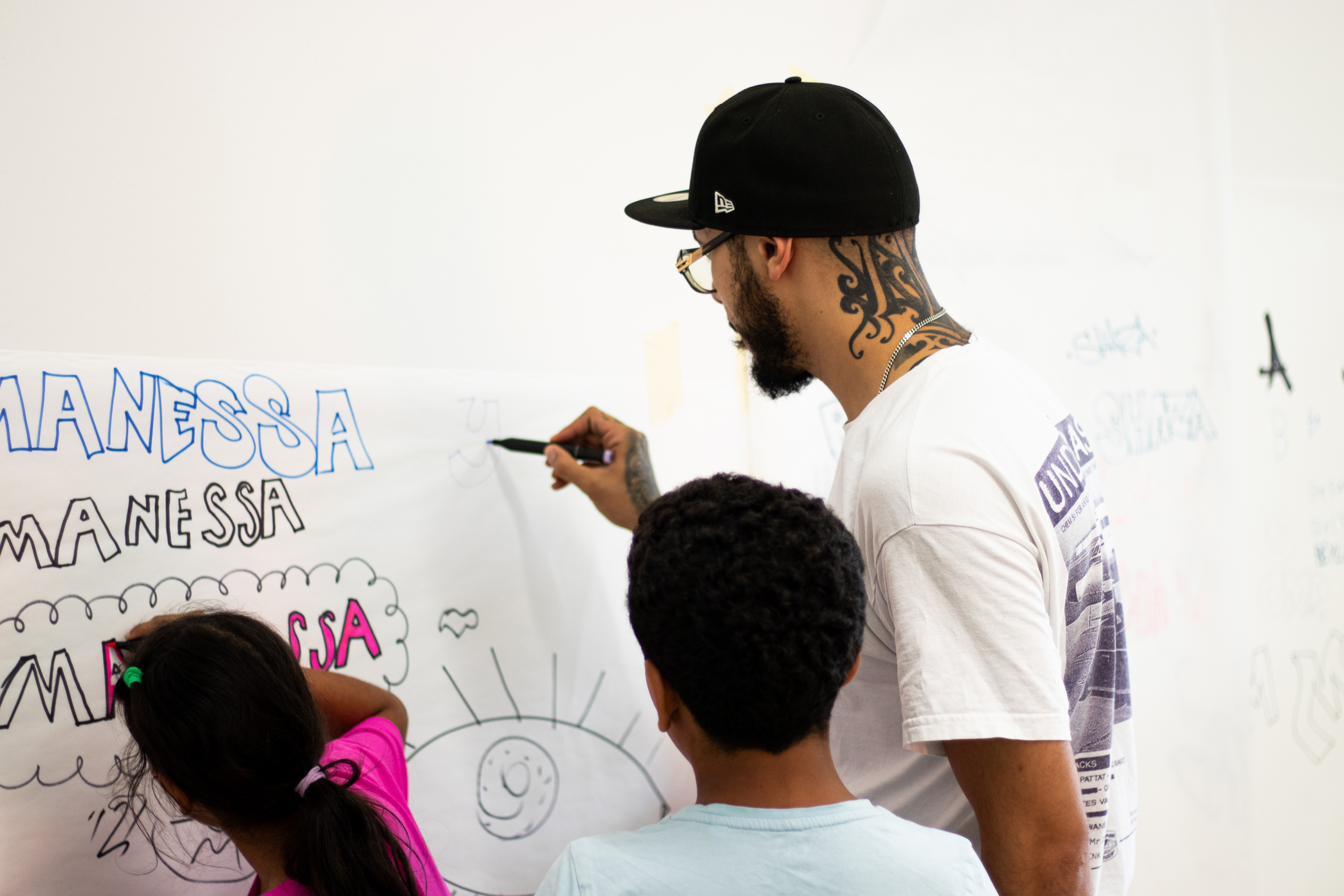
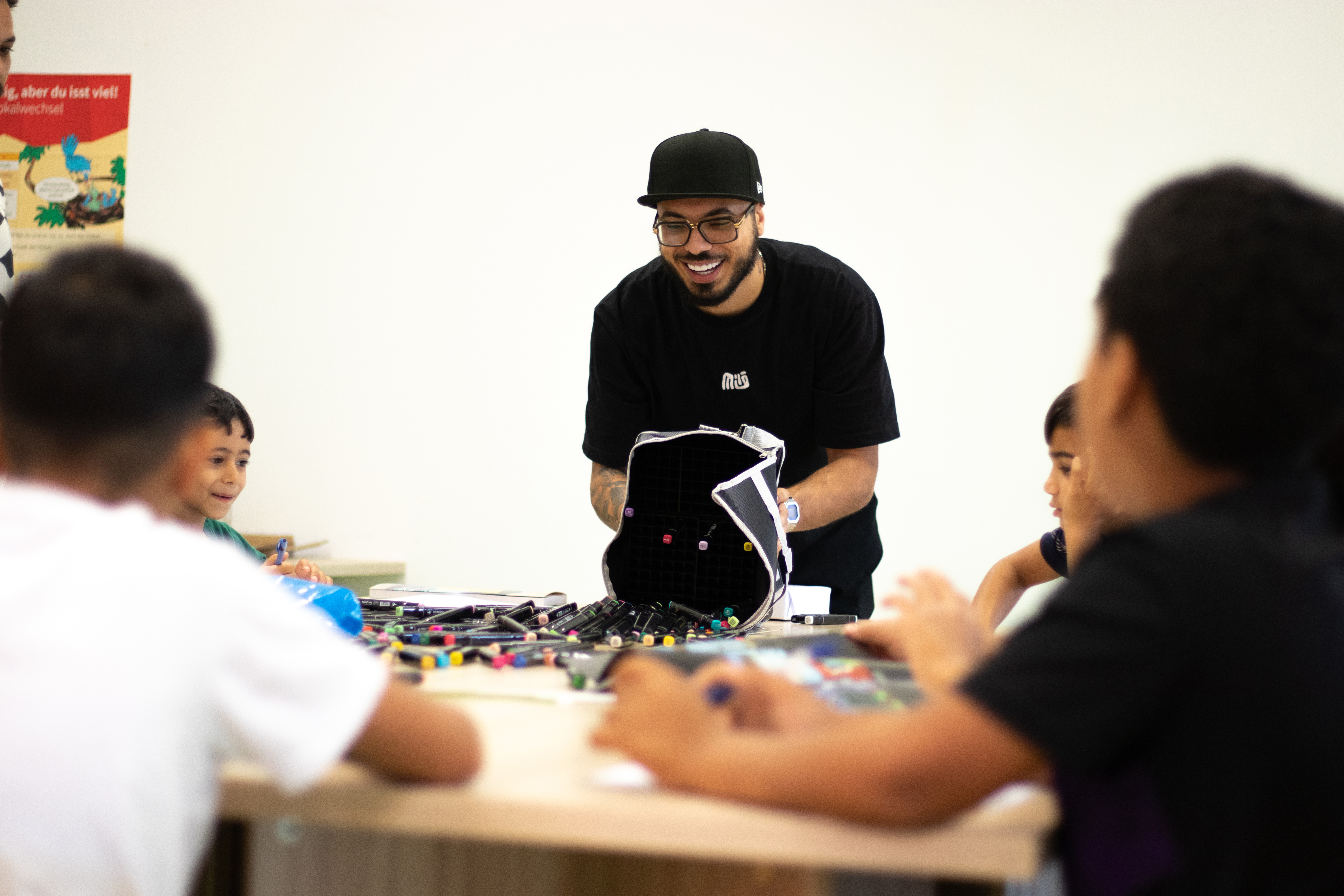
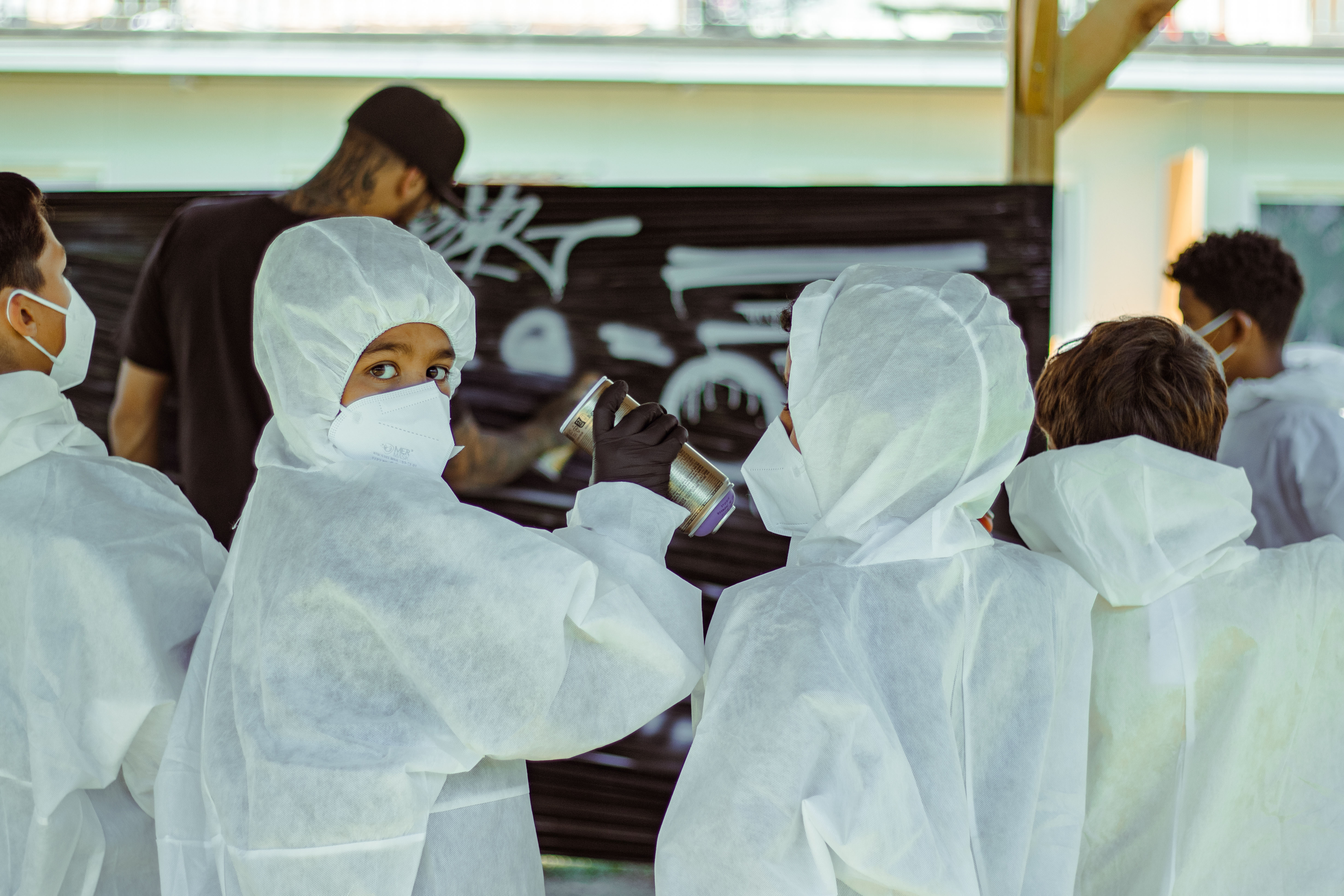
On a typical afternoon inside our library in GU Britz, a quiet transformation begins. Sketchbooks open across the tables. Markers click. Children lean over their pages, carefully tracing the flowing shapes of Arabic letters. But what begins as calligraphy soon transforms into something else entirely.
Welcome to Calligraffiti - where traditional Arabic calligraphy meets the expressive energy of graffiti culture
The lilipad library at GU Britz sits inside one of Berlin’s largest refugee accommodations with more than 250 children living in cramped conditions. For many of them, access to quiet spaces, books, and cultural programmes remains limited. lilipad libraries aim to change that.
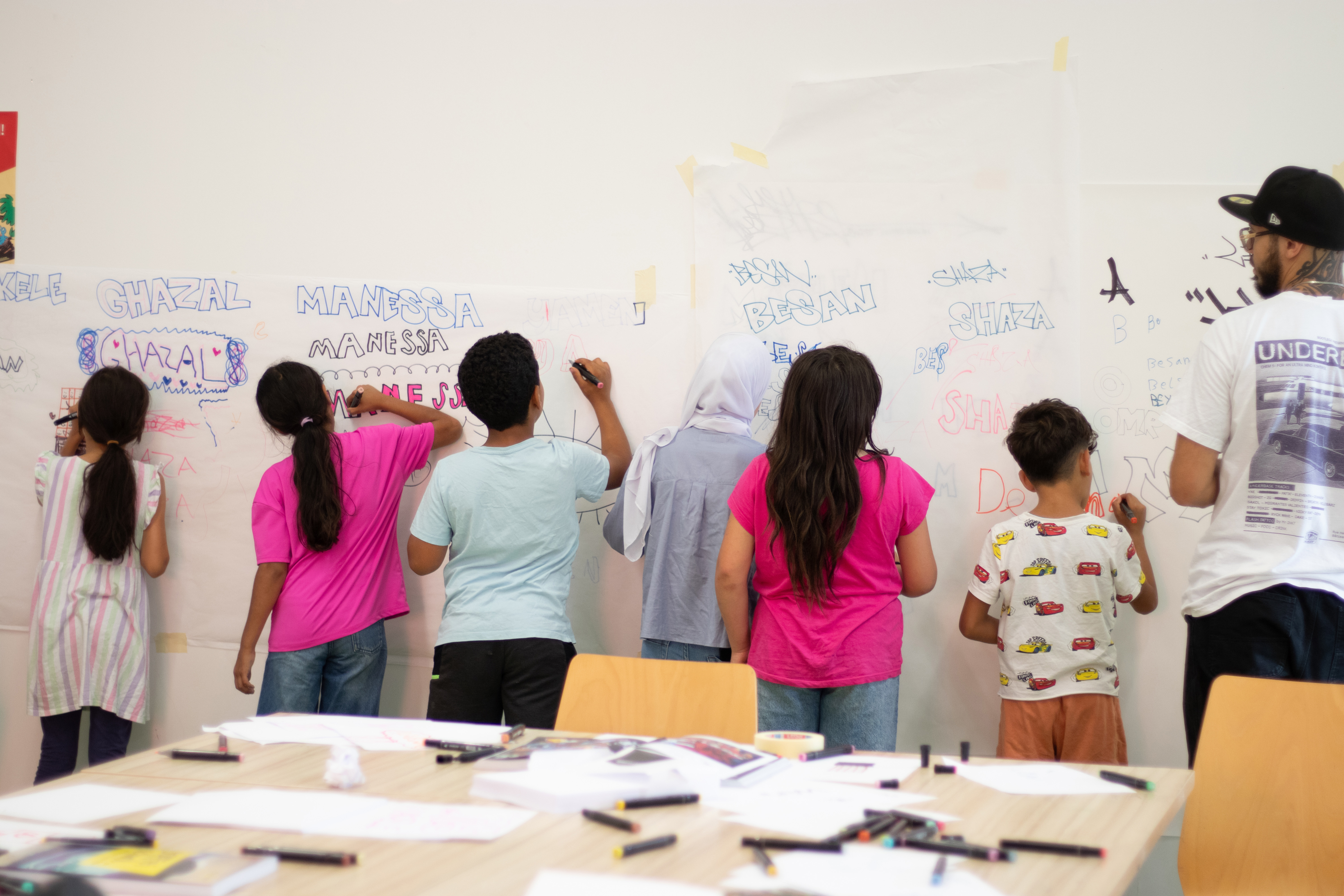
Inside the library, multilingual books line the shelves, and children can read, draw, play, or simply spend time in a calm environment. But alongside daily reading sessions, the space regularly transforms into something more dynamic: a place for artistic exploration.
Combining heritage and contemporary culture
The Calligraffiti programme is part of our wider approach to storytelling workshops: combining heritage art forms with contemporary culture to create accessible pathways into creative expression. Calligraffiti is a contemporary art form that merges the expressive flair of graffiti with the elegance of calligraphy, creating a unique visual language that bridges tradition and modernity. Rooted in classical Islamic calligraphy, it transforms Arabic script into dynamic urban artworks, often conveying messages about social issues. This fusion allows artists to reinterpret cultural heritage in public spaces, making Calligraffiti a powerful medium for personal and political expression.
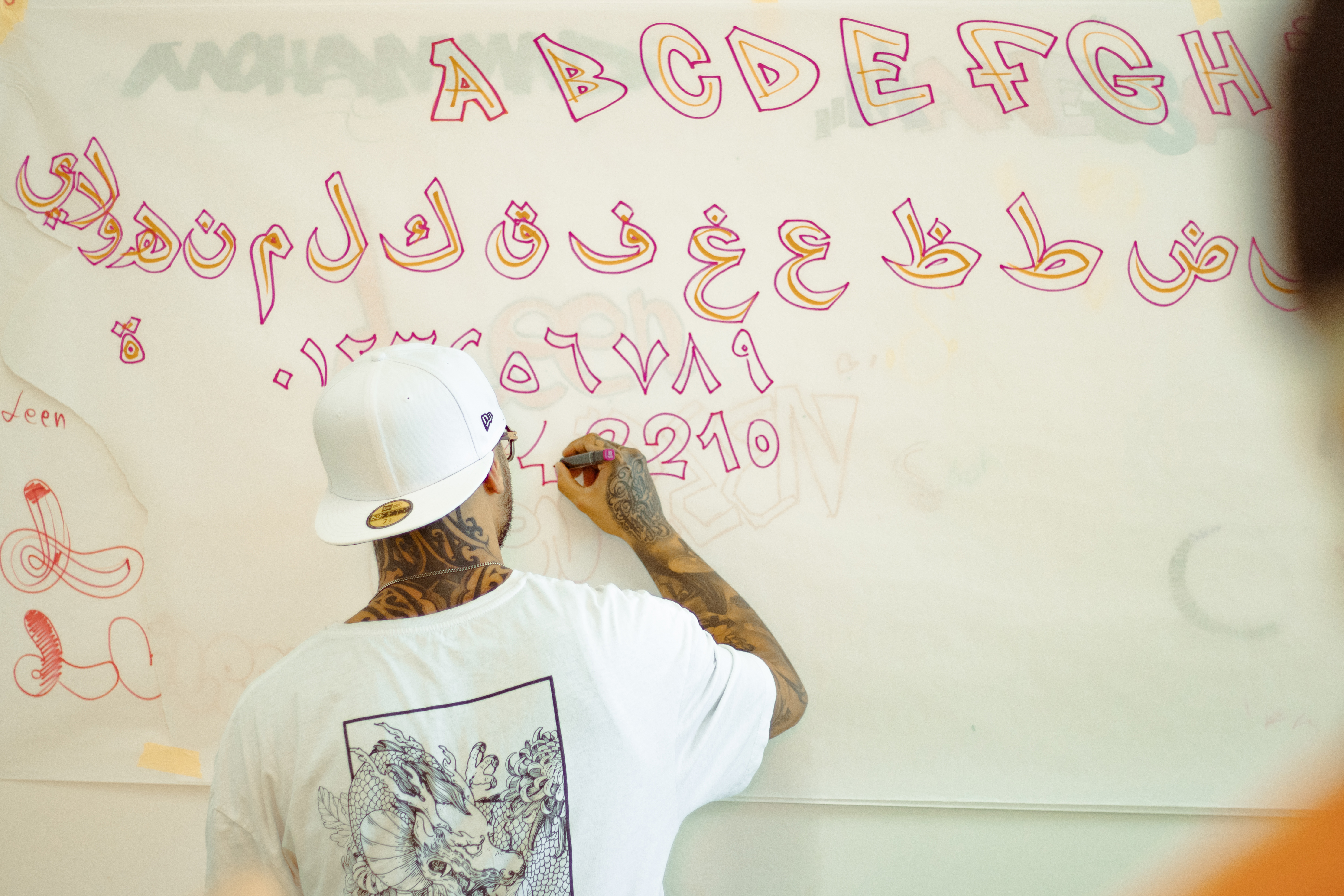
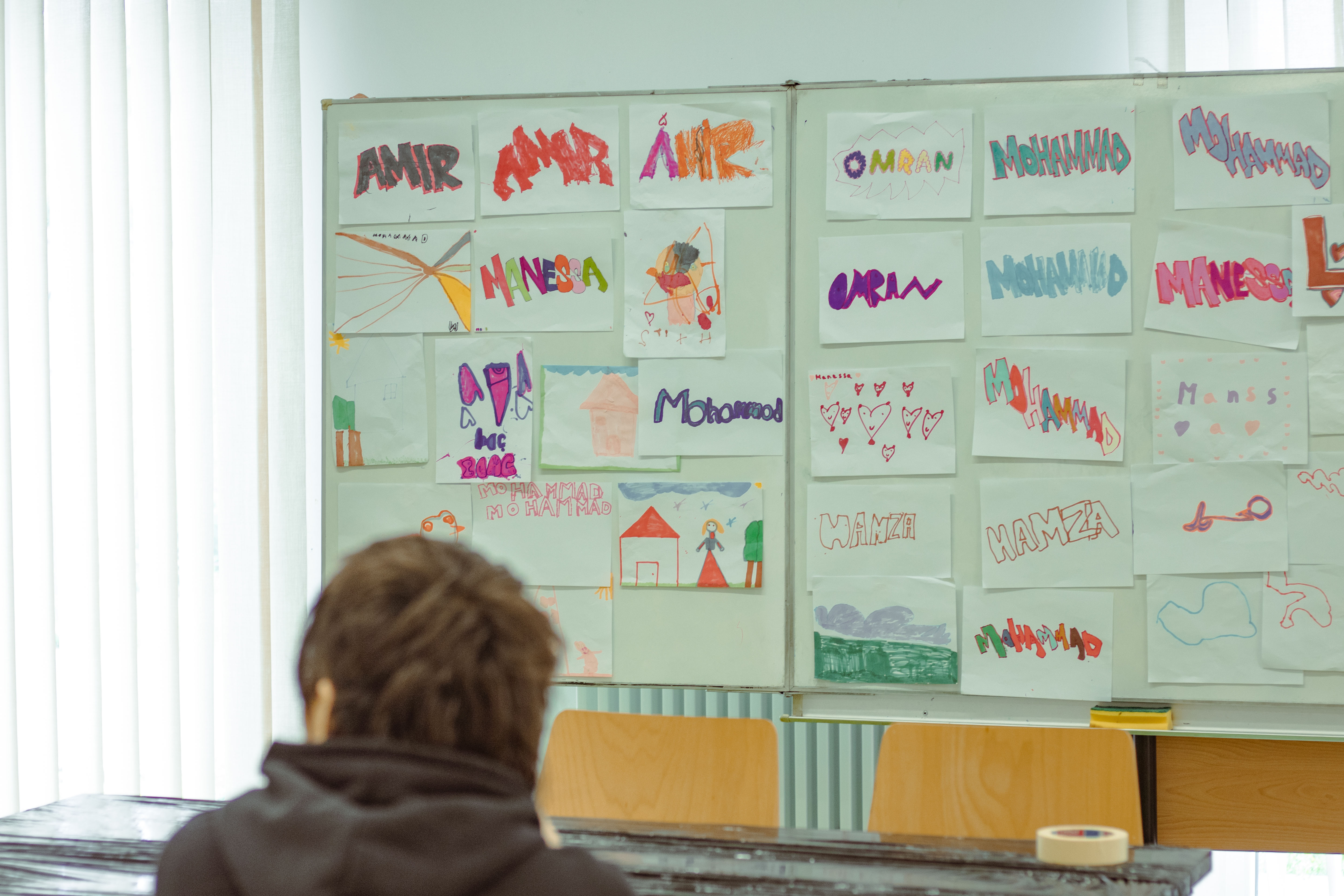
For the children participating in the programme, this fusion opens up new creative possibilities. Under the guidance of artist Mohammad Mhanna, participants explored how letters could be transformed. Some children began by writing their names; others experimented with favourite words, symbols, or abstract shapes. Mhanna, aka MOESTR, is a Calligraffiti artist renowned for his unique fusion of traditional Arabic calligraphy and contemporary graffiti. His work masterfully manipulates and bends letters, maintaining the sacred rules of calligraphy while infusing a modern flow. Passionate about both calligraphy and tagging, Mhanna blends the past and future in his art, which spans walls and tattoos. Since moving from Beirut to Berlin in 2021, he has continued to develop his craft, showcasing his dedication of traditional and contemporary styles.
Books that inspire
As the sessions progressed, sketchbooks filled with colour and movement. They experimented and got inspired by the selection of books we provided:
1. Graffiti School by Christopher Ganter
2. Street Fonts by Claudia Walde
3. Arabic Graffiti by Pascal Zoghbi & Karl Don
4. Subway Art by Martha Cooper
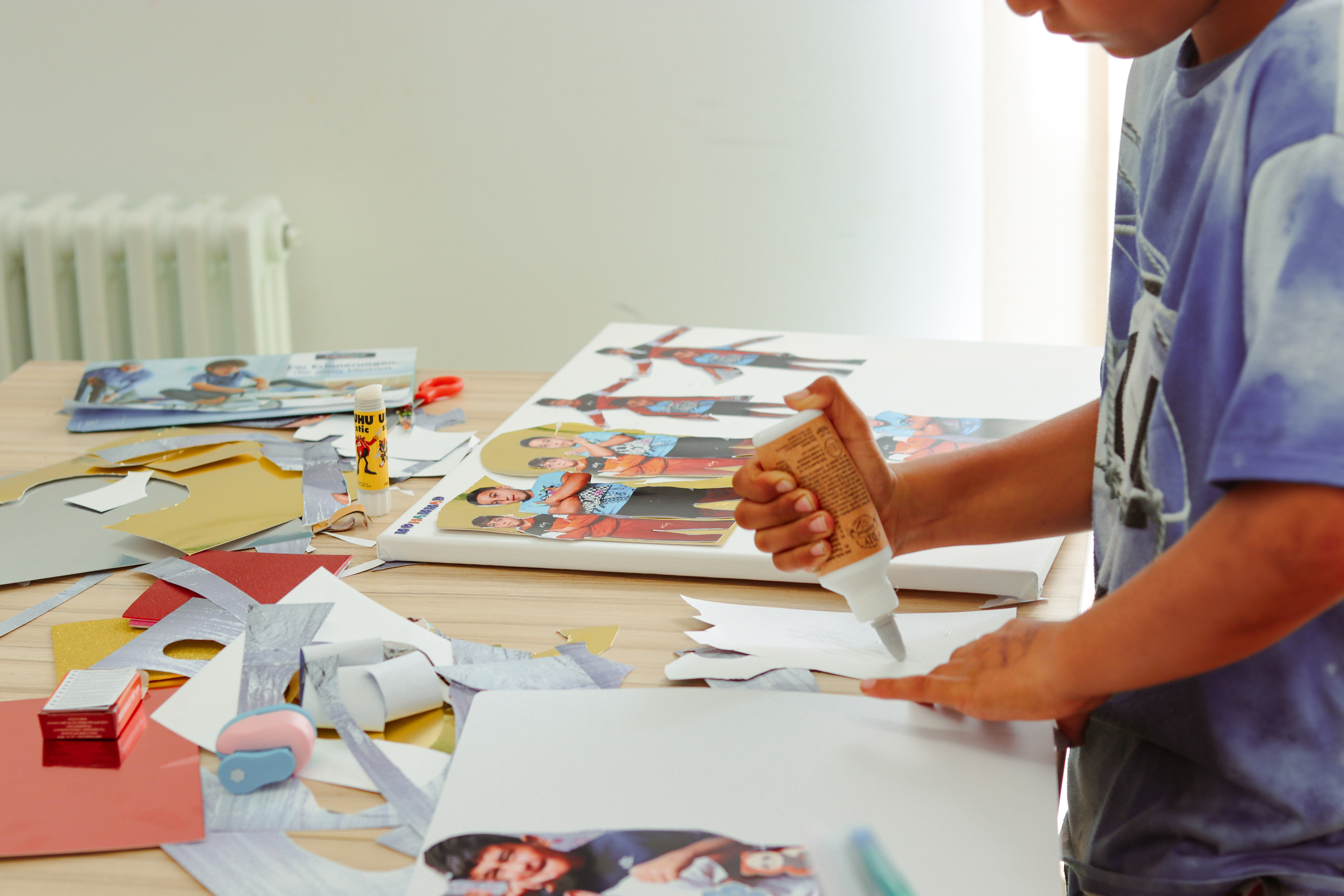
Letters expanded across canvases, layered with graffiti-inspired textures and bold graphic forms. The workshops encouraged experimentation and playfulness, turning the library into a lively studio where artistic identity could take shape.
From workshop to exhibition
After months of workshops, the programme culminated in a public exhibition, bringing the children’s work into a wider cultural space. The exhibition took place at Spore Initiative in Berlin, creating an opportunity for the artworks to reach audiences beyond the library walls.
Why programmes like this matter
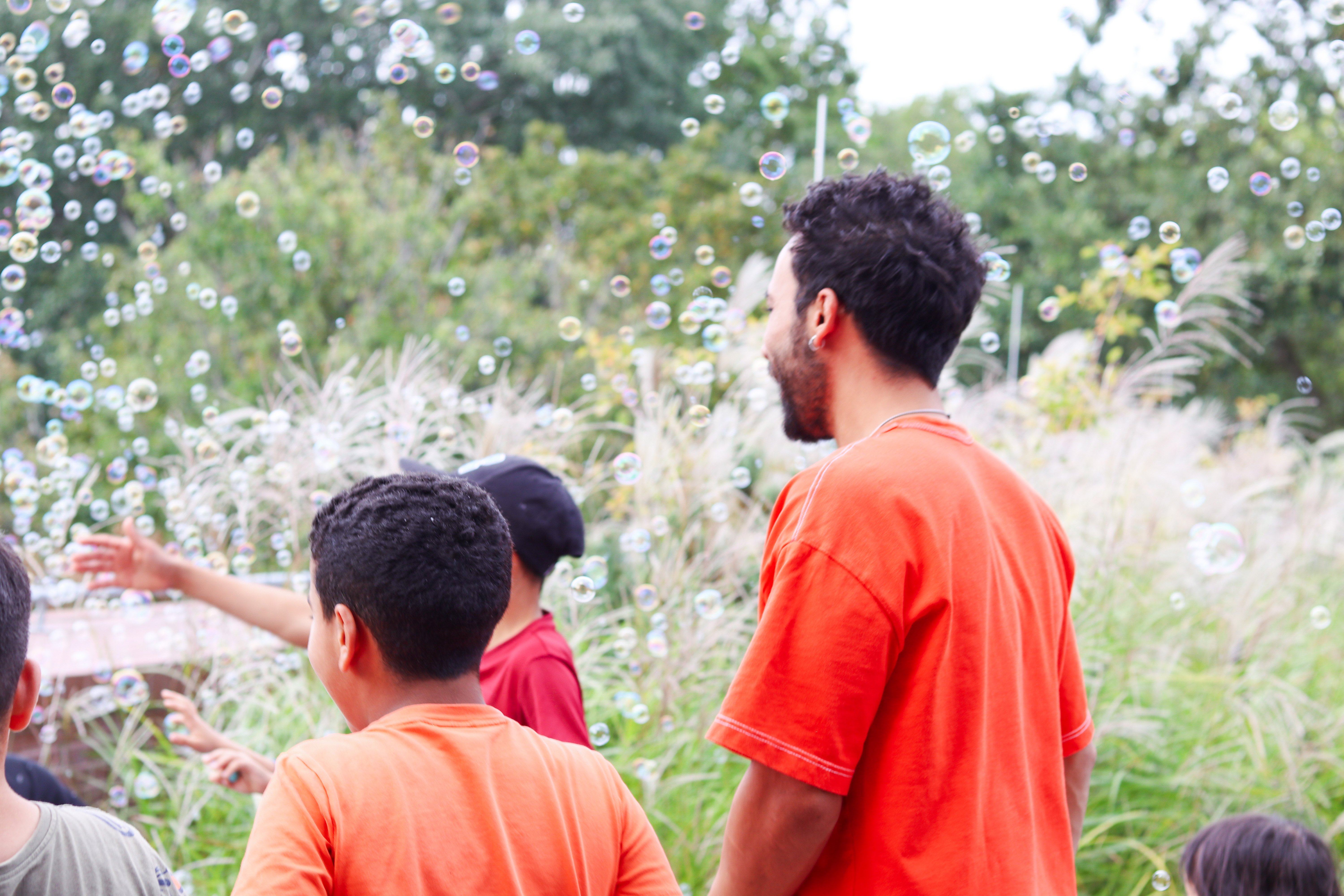
The exhibition evening was filled with energy: families, volunteers, and community members gathered to celebrate the young artists and their work. For many children, it was the first time their artwork had been publicly displayed. Moments like these matter.
When children see their ideas taken seriously - framed on walls, photographed, and shared with a wider audience - it changes how they see themselves. Thanks to the generous support of SPORE Initiative, the exhibition became a powerful celebration of creativity, identity, and community. Today, the artworks continue to live on inside the GU Britz lilipad library, where they are now permanently displayed.
Children living in refugee accommodations often experience instability, limited access to cultural spaces, and interruptions in their education. Creative programmes cannot solve these structural challenges, but they can offer moments of agency.
Programmes like Calligraffiti are always collective efforts
A heartfelt thank you to all the artists and facilitators who shared their knowledge, creativity, and patience with the children throughout the workshops. We are also deeply grateful to SPORE Initiative for hosting the final exhibition and creating a space where the children’s work could be celebrated publicly. This programme was made possible thanks to the support of Projektfonds Kulturelle Bildung, whose funding helps ensure that children across Berlin have access to meaningful cultural and artistic experiences.
And finally, our deepest thanks go to the young artists themselves!
In the future, we hope to expand Calligraffiti structurally, bringing the workshops to more districts in Berlin. Our goal is to make programmes like this accessible to more children living in transitional housing.
Credits:
Concept and design by Mohammad Mhanna and Nour Alabras
Organised by Lilipad e.V.
Photos by Nour Alabras and Marina
Workshops led by Mohammad Mhanna, Taha Sheikh Dieh, Nour Alabras, and Jana Gebhard
Supported by Berliner Projektfonds Kulturelle Bildung

Keep reading
.jpg)


Donate
Keep our libraries running
Your support helps ensure children continue to have access to spaces where their language, curiosity, and imagination are taken seriously.